
The Montessori Spirit
At the beginning of the 20th century, Maria Montessori discovered that, by offering suitable materials and letting children freely choose their activity, they are able to learn by themselves and at their own pace.
Educational principles
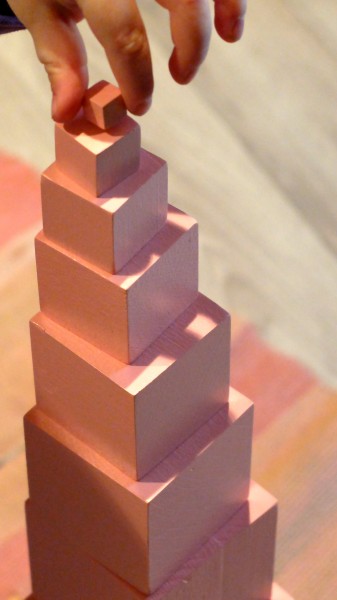
Sensorial and practical-life activities prepare children for later learning, all the way to abstraction (writing, reading, mathematics, geometry, grammar). Encouraged in individual work, neither judged nor interrupted, the child develops concentration and self-confidence.
The prepared environment
The environment is simple, calm, beautiful and protective. Scaled to the child’s size and strength, it allows them to move about independently. The materials are arranged on low shelves within reach, each object having its own defined place.
The learning materials
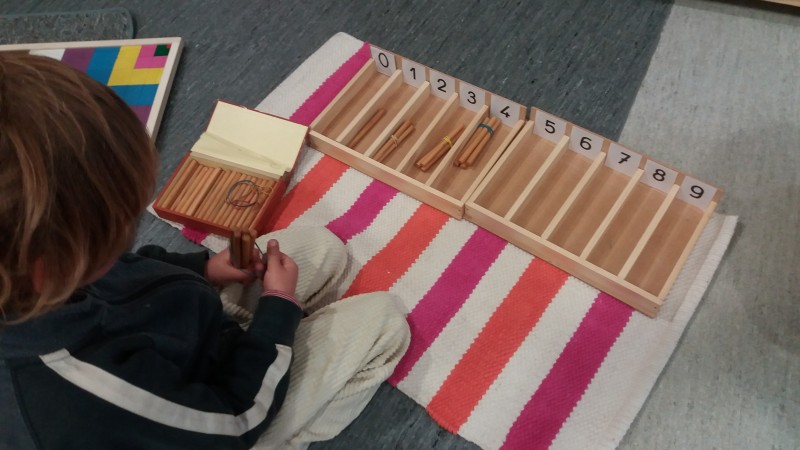
Unique, they avoid comparison and foster self-esteem. Choosing an activity according to one’s interest, handling it, practising and self-correcting in a safe setting brings satisfaction and motivation.
The role of the educator
The educator prepares the environment. Their observation is essential to present the materials at the right moment, respecting each child’s pace and sensitive periods.
Further reading
- The Child — Maria Montessori
- The Absorbent Mind — Maria Montessori
- The Montessori Method (vol. I, II, III) — Maria Montessori